

Marketers have more data than ever before, but a new report from Bitly suggests they’re still struggling to answer a fundamental question: What actually works?
According to Bitly “The Marketing Visibility Report, the average marketing team now uses six different tools to measure performance. Yet only 18% of marketers say they have a clear picture of what’s actually working.
Part of the problem is that marketing is now everywhere.
The report, which surveyed more than 250 marketing professionals, found that 72% of marketers use organic social media, making it the most common channel in the marketing mix. Dedicated campaign landing pages, email campaigns, and paid social are also some of the most used channels.
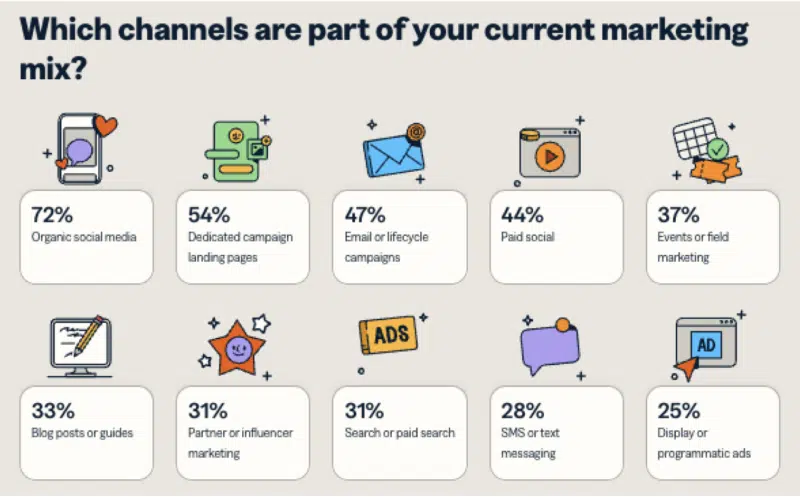
This creates a visibility challenge, as each channel tells a different story. Social platforms generate engagement metrics almost instantly. Landing pages show conversions but often reveal little about what drove visitors to that destination. Email connects brands to known audiences, but often operates separately from other marketing systems.
The result is marketers trying to build a complete picture from a set of disconnected signals.
Adding tools did not resolve this issue. The report reveals that the most commonly used measurement platforms focus on individual channels, including social analytics, web analytics, email platforms and CRM systems. Tools designed specifically to connect performance across channels and link activity to results remain much less common.

This fragmentation shows up most clearly in the channels that marketers rely on the most.
When asked where they encountered the biggest gaps in viewability, marketers ranked organic social media first, followed by dedicated campaign landing pages, paid social, search, and email campaigns.
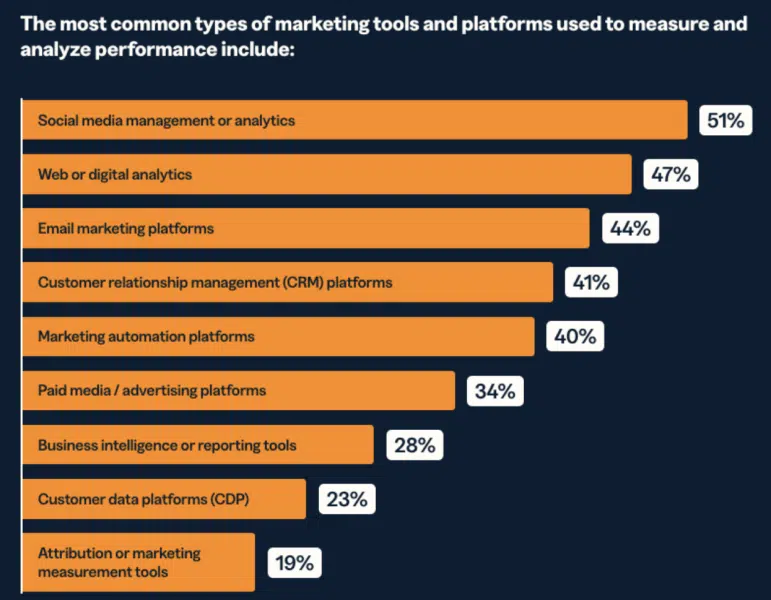
The organic social result is particularly notable. This is the channel used by almost three quarters of marketers, but it is also the one where visibility problems are the most serious. The report claims that marketers can easily detect activity on social platforms, but often struggle to connect it to meaningful business outcomes.
Landing pages present a similar challenge. They are close to conversion and often serve as a source of truth for campaign performance, but they rarely explain what influenced visitors before they arrived. Without this context, marketers know what happened but not necessarily why.
The report suggests the problem could get worse before it gets better. AI-generated responses, no-click behavior, private sharing, and dark funnel activity create even more interactions that marketers can’t easily track. At the same time, AI accelerates campaign creation and optimization, increasing the volume of activity teams need to understand.
In other words, marketers don’t suffer from a lack of data. They suffer from a lack of connection between the data they already have. The challenge is no longer collecting signals. This transforms a growing pile of disconnected metrics into a clear view of what drives business results.
The full report can be found here. (No registration required)
Your customers are searching everywhere. Make sure your brand introduces himself.
The SEO toolkit you know, plus the AI visibility data you need.
Start free trial
Start with




