

Are you thinking about starting your online business but don’t know how to go about it?
You saved ideas, watched tutorials, and told yourself you’d open your business when everything seemed “perfect.” But even after weeks or months, you’re still thinking.
Meanwhile, millions of people are building profitable businesses right from their laptops, from home.
This year, global e-commerce sales are expected to exceed 6.4 trillion dollars. Customers are already buying. But do you sell them?
In this article, you will learn how to turn your idea into a profitable online business in 2026.
Why 2026 is the best time to start an online business
If you wait for the “right time” to get started, there may never be a more convenient and opportunity-rich time than 2026.
Here’s why.
- Online shopping is now a daily habit
People are no longer trying online shopping. They depend on it. Groceries, clothing, jewelry, consultations and classes are now purchased online by default. Buy online has become a part of daily life. This means you no longer need to convince people to buy online: you just need to convince them to choose. You.
- You don’t need technical skills to get started
A few years ago, starting an online business meant hiring lots of people from various fields. But now it’s completely different. You benefit from beginner-friendly platforms that help you launch a professional website in days or even hours.
You can:
- Create stores without coding
- Easily automate emails
- Accept payments instantly
- Manage inventory digitally
In short, technology has become your assistant.
- Marketing has become more accessible
In the age of social media, you don’t need a big budget to get attention.
Social platforms, search engines and content channels allow small brands to compete with large companies at affordable prices.
With the right strategy, you can:
- Reach niche audiences organically
- Build communities around your brand
- Turn content into long-term traffic
- Test ads with small budgets
Smart Marketing can beat expensive marketing.
How to start a profitable online business from scratch
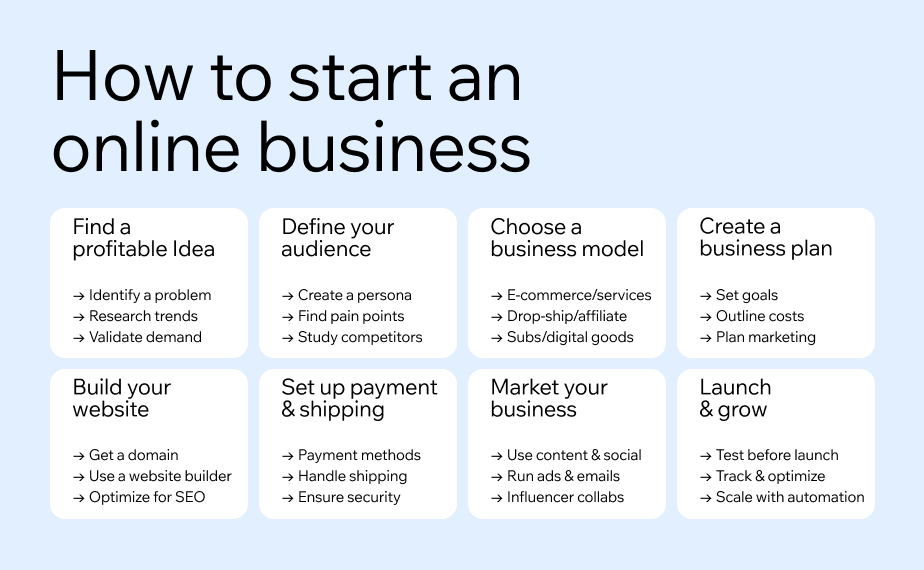
Building a profitable online business from scratch is about following a clear process and executing it consistently.
How it works in practice:
- Choose the right business idea and niche
Your online business starts with an idea in mind. But what is more important to answer is who is your idea for?
Many beginners try to target everyone because they are afraid of limiting themselves. But what really works is a niche-specific audience rather than broad targeting. When your message is for everyone, it doesn’t seem personal to anyone.
Therefore, focus on a specific group and a specific problem. For exampleinstead of creating “an online clothing store,” you could focus on “sustainable activewear for outdoor fitness enthusiasts.” This clarity makes your brand easier to understand and trust.
Your best ideas come from your own experiences, skills or frustrations. Think about problems you have solved for yourself or others. These problems can become profitable opportunities for you.
When you choose a clear niche, marketing your product becomes easy. Content becomes more relevant and customers feel like you really understand them. Consumable products are particularly effective because they generate repeat purchases and predictable demand.
- Validate the request before investing money
Before building a full website, purchasing inventory, or designing branding strategies, you need one thing: proof that people care.
Validation saves you from wasting months on something no one wants.
You can start small by sharing your idea in online communities. Offer early access. Create a simple page describing your product and see if people sign up. Ask your potential customers if they would pay for your solution.
For examplesomeone planning to sell an online course may offer free mini-sessions first. If people come forward and ask for more, that’s a strong signal to continue.
If interest is low, don’t be discouraged. Use it as feedback. Adjust your idea, refine your offer and test again. Validation is not about being immediately right. It’s about learning and adapting quickly.
- Create a website and online presence
Once you know people are interested, it’s time to create your online store where you will make sales.
Your website is where you build trust. When visitors land on your page, they should instantly understand what you’re offering, who it’s for, and how it helps them.
Keep your design simple and clean. Avoid clutter and focus on clarity.
Your website should clearly explain:
- What problem are you solving
- How does your solution work?
- Why people should trust you
- How they can buy
With a website, your online presence matters too. Open an account on Instagram, YouTube and LinkedIn. Additionally, you can even start writing blog posts about your product or case studies to build trust and loyalty. Create company profile presentations, training slides or present your case studies to clients. You can use editable presentation templates and adapt them to your color palette or brand identity.

We earn a commission if you make a purchase, at no extra cost to you.
- Create products or services that people need
Many companies fail because they create products based on assumptions rather than customer needs.
Your job is to impress people with your product by telling them how it makes their lives easier.
Pay attention to questions, complaints and frustrations in your niche. These are cues you can focus on while creating better products.
For exampleIf customers continue to say that existing tools are too complicated, making your tool easy to use will give you an advantage.
Before finalizing your offer, talk to potential buyers. Ask them what they struggle with the most. Let their answers guide your development.
When customers feel like your product was “made for them,” selling becomes much easier.
- Set up payment systems
A complicated checkout process reduces your sales. Confusing forms, limited payment options and unclear policies create hesitation.
Your payment system should be fast, secure and simple. Customers should be able to complete their purchases within minutes across all devices.
Be transparent about pricing, refunds, and support. People trust companies that are clear and honest.
Before you get started, always test your payment process yourself. Experience it like a customer and fix anything that feels uncomfortable.
- Drive traffic through SEO, social media and content
Traffic is the most important part of your online business. Partnerships and sponsorship programs can become powerful growth engines once your product gains traction. Many founders use affiliate management platforms to track referrals, manage commissions and scale distribution through trusted partners.
Instead of trying to master all platforms at once, start with just one main channel. Focus on creating useful and relevant content for your audience.
If you choose to blog, answer real research questions. If you choose social media, share helpful tips, stories, and behind-the-scenes content. If you choose video, teach and entertain.
The goal is to build trust first instead of promoting your product from day one.
When people see that you are constantly adding value, they naturally become curious about what you are selling.
- Convert visitors into customers
Attracting visitors to your website, social media pages, or forms is only halfway there. Turning them into paying customers is what matters most.
Your website and content should guide people to action.
Use language, tone and style that your target audience understands. Show real testimonials. Explain the benefits and features of your product. Remove unnecessary steps from the purchasing process.
For exampleinstead of saying “our platform has multiple integrations,” say “connect all your tools in one place and save hours every week.”
Pay attention to what customers say after purchase. Their words become your best marketing copy.
Small improvements in clarity and confidence can double your sales over time.
- Scale with automation and outsourcing
When you start your business, you will do a lot of things yourself. But as your business grows, it becomes difficult to manage everything alone.
Automation and outsourcing help you save time.
You can automate emails, follow-ups, and order management. You can also outsource design, content editing, and customer support.
Start small by automating and delegating one task at a time, and gradually build up complete systems.
Your next step begins now!
To build a profitable online business in 2026, it’s important to make smart decisions, take action, and commit to your growth.
Validating your idea, building trust, driving traffic, and scaling your growth play a vital role in building a successful online business. Although success comes slowly, it can be achieved over time.
Image from freepik



