
Introduction
There was a time when runners accepted size compromises. In the quest for speed and freedom, small inconveniences were simply part of the experience: a phone bouncing against the body, keys jingling with every stride, sweat gradually saturating the fabric until comfort gave way to friction and discomfort.
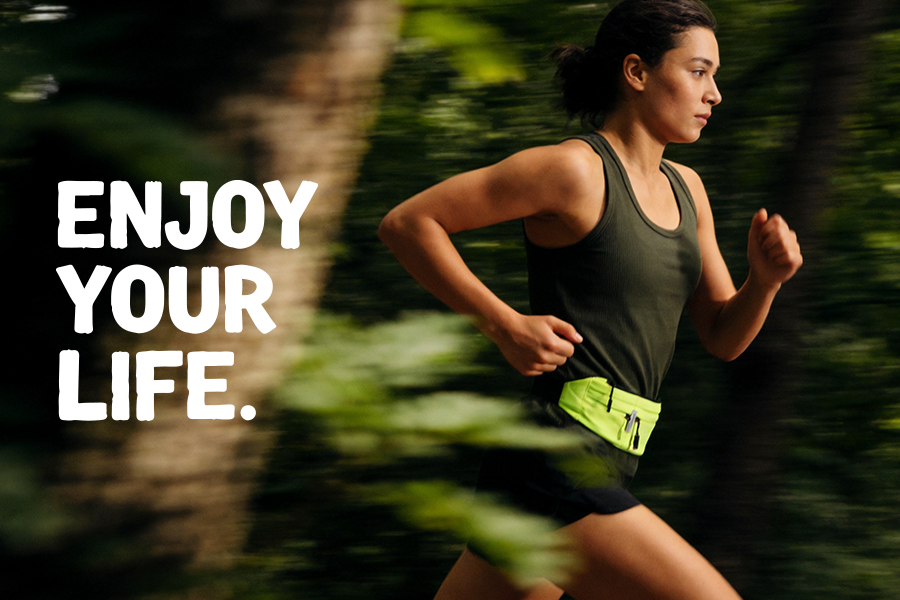
Then WATERFLY entered the scene. More than a running accessory, it redefines the sensation of movement. What was once a utility pouch has become something closer to a built-in layer of movement, an object designed to fade into the run rather than interrupt it.

Ending “rebound”: a change in dynamic stability
Before WATERFLY, runners often faced a tension between load capacity and stability. The fanny packs moved unpredictably, introducing constant micro-disturbances that disrupted rhythm and concentration.
The designers of WATERFLY did not treat this as a comfort problem, but as a mechanical problem. The principle was simple: runners don’t need another bag. They need equipment that moves in alignment with the body. Stability became the central design principle, guiding each iteration toward a single goal: reducing friction in motion.
An engine of evolution: a living laboratory of movement
WATERFLY rarely processed product development as a linear liberation process. The original running belt (ONJ22) functioned less as a finished product and more as a working hypothesis, tested in real-world conditions by thousands of runners whose feedback continually shaped the refinement.
This co-creation model reframed user feedback as an ongoing field study. Rather than isolating design decisions, the brand encouraged experienced runners to test products under real-world stress conditions.
Key information Understood:
Freedom from restriction: Many runners reported that arm-mounted phone holders felt tight during longer runs and made accessing devices difficult mid-stride.
Micro-failure points: As fabric absorbs moisture and expands, small zippers tend to stick under tension.
These recurring sticking points became the basis for successive redesigns, with each version removing another layer of interference.
WATERFLY Evolution: Seven iterations towards a “second skin”
WATERFLY’s philosophy rejects the idea of a perfect first version. Instead, it views continuous refinement as a core identity.
First phase: awakening of interaction
Version 1, Rethinking Touchpoints
Early zipper systems were redesigned with larger anti-slip pullers, allowing for blind use so runners can access storage without disrupting stride or concentration.


Phase Two: Expand Adjustment Intelligence
Version 2, Global Adaptation (October 2024)
Based on body data from all regions, the belt has been lengthened by 3cm at both ends and enhanced with elastic memory fibers, improving fit consistency across different body types and comfort over long distances.
Phase three: structural reinforcement
Version 3, Interior Sustainability (February 2025)
Standard liners have been replaced with reinforced internal fabrics designed to withstand repeated compression while maintaining compartment stability.
Phase four: reducing friction
Version 4, zero resistance design (April 2025)
A precision binding process has been introduced beneath the zipper paths to reduce fabric snagging and improve motion-based usability.

Version 5, Structural coherence (May 2025)
Standardized reinforcement stitching at pocket ends eliminates manufacturing variations, maximizing usable internal space while improving long-term durability.

Phase five: sensory refinement
Version 6, Material Innovation (Yoga Touch Blend)
A high-ratio nylon-spandex blend, inspired by premium sportswear, has been introduced to improve all-day comfort and next-to-skin feel.
Phase six: minimum weight, maximum presence
Version 7, The masterpiece
The emphasis on engineering reached its pinnacle with the design of the WATERFLY Running Belt (ONJ22) – a ultra-thin (2mm), light Running belt (100g) designed in seven iterations for maximum stability. It is a study of functional harmony, obtaining a profile that is simultaneously active, sustainableAnd comfortable for everything from casual morning runs to competitive marathon races.
The design has achieved an ultra-thin silhouette, compressed to just 2mm thick, ensuring the belt is sustainable as it is light— ready for urban streets and rugged trails. To protect what matters most, a double layer water resistant The system was introduced:
- An outer layer designed to shed rain, sweat, sodas and everyday splashes.
- A 0.015mm TPU inner membrane that protects sensitive electronic devices from moisture.
Weighing approximately 100 grams (comparable to a standard sized chocolate bar), it creates an almost imperceptible silhouette, proving that true performance is found in what you don’t feel.

The final expression: color as identity
With the major performance issues largely resolved, the focus shifted to expression. THE WATERFLY Running Belt (ONJ22) expanded into 16 selected colors, transforming it from a functional object into a form of personal identity.
For many runnersit is less about utility and more about representation, an object carried through streets, parks and trails as part of an individual rhythm and style.

Conclusion: a quiet evolution of running
This isn’t just the story of a treadmill. This reflects a broader shift in how movement is experienced in modern life.
As distractions increase, the value of uninterrupted movement becomes more visible. The goal is no longer just efficiency or speed, but continuity of attention and ease of movement.
In this sense, the evolution of WATERFLY reflects a broader change: a quietly rethink the way we move through space, and how much of ourselves we allow to remain uninterrupted while doing so.



