
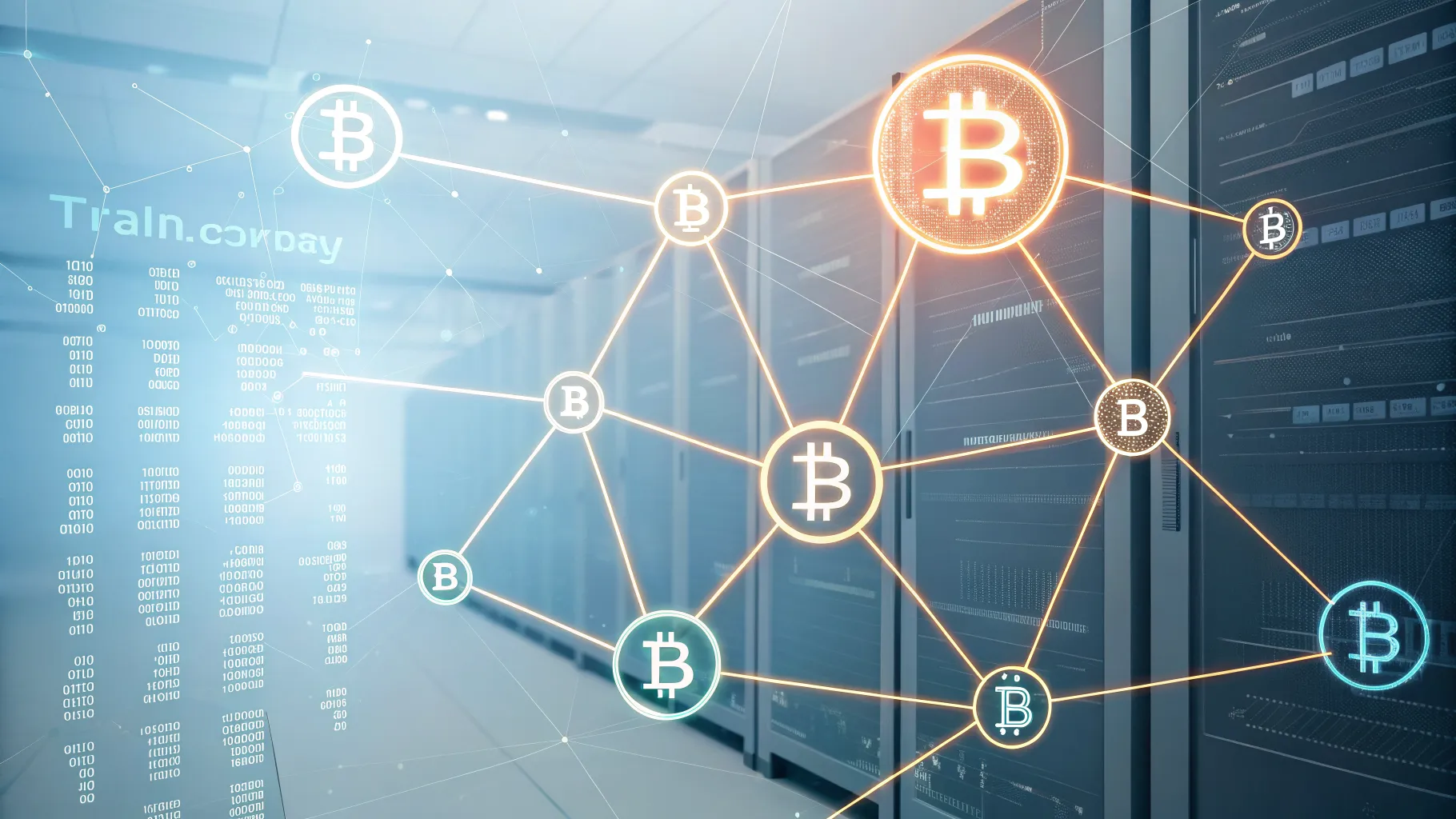

As digital money attracts new users and regulators, one idea stands out: Bitcoin moves value between people without banks or governments in the middle. The system runs on a network of independent computers around the world and relies on code rather than a central authority. Supporters say this design expands access and reduces costs. Skeptics warn of risks, from price fluctuations to scams.
Basically, the pitch is simple and direct:
“Bitcoin operates on a P2P network instead of being controlled by the government, a bank, etc. It allows you to send value directly to someone else without a middleman.”
How the network works
Bitcoin was launched in 2009, inspired by a nine-page white paper describing a “peer-to-peer electronic payment system.” Instead of accounts held by banks, users control cryptographic keys. Transfers are broadcast to a public ledger called a blockchain, where they are grouped into blocks.
Independent “miners” compete to add each block by solving a proof-of-work puzzle. This process takes on average about 10 minutes per block. Once a block is added, transaction history becomes difficult to modify.
There is no central server. Thousands of nodes maintain copies of the ledger, verify new transactions, and enforce rules. This design aims to make the system difficult to censor and shut down.
Why it’s important to cut out the middleman
Donors see peer-to-peer payments as a way to send money across borders faster than some traditional channels. They also highlight resistance to censorship in places where financial access is limited or unstable. For merchants, direct settlement can reduce the risk of chargebacks.
Cost is a key point. Intermediaries collect fees, set terms and can freeze funds. With Bitcoin, fees and speed vary based on network activity, but the rules are open and the ledger is transparent.
Ongoing trade-offs and risks
The same features that remove gatekeepers introduce new costs and responsibilities. There is no help desk for lost passwords. Price volatility can wipe out value in a day. Fraudsters can target newcomers who don’t understand how to secure their keys.
- Self-custody requires careful key management.
- Price fluctuations can affect savings and payments.
- Addresses entered incorrectly may result in permanent loss.
- Criminal abuse is subject to regulatory scrutiny.
Energy consumption remains subject to debate. Proof of work consumes electricity to secure the network. Critics say it harms the climate. Supporters say miners use excess or stranded energy and help stabilize grids. Both sides point to changing data as mining moves from region to region.
Regulation and global experiences
Governments are testing different approaches. Some consider Bitcoin to be tax property. Others apply money laundering rules to exchanges. Banks are exploring ways to serve their customers while meeting compliance requirements.
A few high-profile initiatives have attracted attention. In 2021, El Salvador adopted Bitcoin as legal tender alongside the US dollar. The experiment aims to boost financial inclusion and remittances, although it has faced technical problems and public skepticism. Other countries are studying the results rather than copying them.
Meanwhile, central banks are exploring their own digital currencies. These would retain a central authority, the opposite of Bitcoin’s approach, but aim to modernize payments and strengthen oversight.
Use cases and limitations
Bitcoin is used for savings, cross-border transfers and high-value settlements. It may be slower for small daily purchases on the base layer. To solve this problem, the developers built the Lightning Networka system that routes small payments off-chain and later settles them on-chain. Adoption is uneven, but increasing in certain regions and applications.
Institutions are also entering the space with regulated products that track the price of Bitcoin. These tools can expand access but reintroduce intermediaries, blunting the original purpose of peer-to-peer.
What to watch next
Three questions arise. First, can the system scale without losing its core functionality. Second, how will regulators shape the market for exchanges, wallets and payment apps. Third, will users learn how to guard safely to avoid losses.
For now, the basic idea remains unchanged. A user with a private key can send value online without seeking permission from a bank. This promise arouses interest in times of financial tensions and exchange controls.
As more people test this model, we can expect a continuing tension between openness and surveillance. The outcome will depend on education, better tools and clear rules. Peer-to-peer money has grown from a niche project to a global trial. The next phase will show whether it can handle growth while keeping its original goal intact.



