
- By
In the modern world, almost everything competes for one thing: your attention. Not your money. Not your clicks. Not even your data, at least not directly. Your time is the most valuable and contested resource on Earth today.
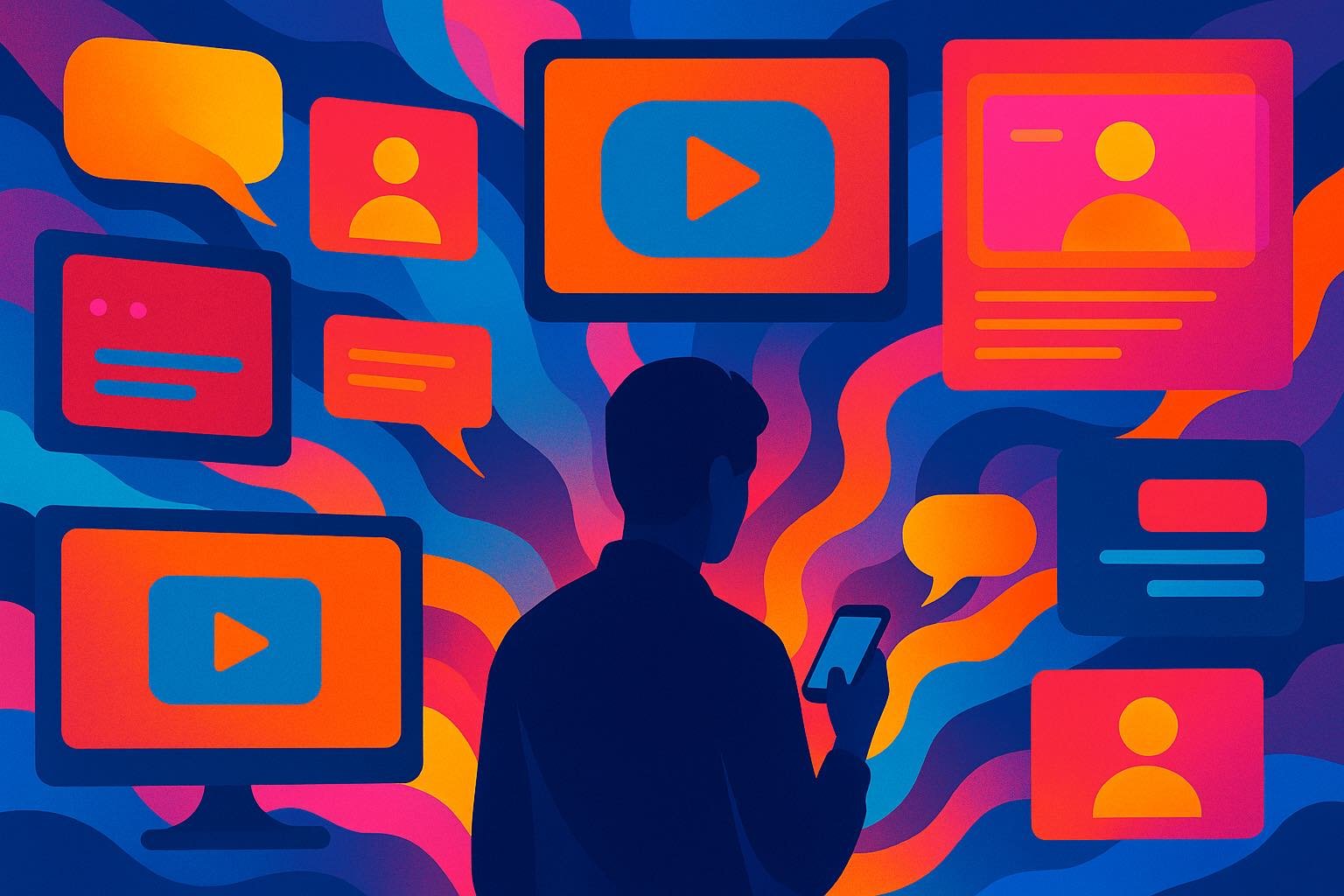
Think about it: billions of us wake up, pick up our phones, and begin a daily ritual of scrolling, looking, swiping, and liking. We spend hours consuming content designed to hold our gaze for just a few seconds longer. But there is a catch:
Human attention is limited. And this fact has huge implications for everything from advertising to media to the future of human productivity.
The mathematics of attention
Let’s start with a simple but staggering number.
Roughly 7 billion people use smartphones all over the world. If everyone spends justly 1 to 3 hours per day on digital content, this represents:
- 7 to 21 billion hours of attention per day
- 2.5 to 7.5 trillion hours per year
That’s the entire global “attention budget” devoted to digital content. No matter how many new apps, platforms, or streaming services emerge, there are no more hours to spare. Everyone is already at maximum.
So if time is limited and every platform is fighting to get it, we have entered into a zero sum game– a world where growth for one player often means loss for another.
When attention becomes a business
It is the heart of attention economy: the more time you spend on a platform, the more advertisements you see and the more money it makes. As user growth slows, platforms have turned to more aggressive tactics:
- More ads per minute of content
- Addiction-optimized algorithmic feeds
- Content designed for emotional arousal and rapid consumption
This is not a side effect. It’s a strategy.
And this comes at a cost, not only in terms of privacy or mental health, but also in terms of lost potential. Because the more time we spend consuming, the less time we spend produce, learn, build or think deeply.
Enter AI: producer without the need for attention
As humans become increasingly locked in consumption loops, The AI does not consume anything at all. It produces on a large scale, on demand and without fatigue.
AI can write code, compose emails, generate images, analyze data and even make decisions. It works tirelessly, without the need for entertainment or rest. This means that an increasing share of productivity and creative output will come from systems that I don’t care about the content– they simply succeed.
Meanwhile, humans are sinking deeper and deeper into consumption. The paradox becomes more pronounced: machines work while people watch.
The rise of video and the decline of text
Another key shift is underway within the attention economy itself: the video wins.
Short, dopamine-rich content (TikTok, YouTube Shorts, Instagram Reels) has become the dominant medium for capturing attention. These formats are immersive, emotionally stimulating and require almost no cognitive effort. They are built to hang.
The text, on the other hand, is slower. This requires concentration and interpretation. Therefore:
- Text platforms are losing their share of attention
- Advertising revenue from blogs, news sites and long-form writing is decreasing
- Readers, especially younger ones, become viewers
This creates an existential challenge for independent websites, media outlets and publishing houses. How do you maintain meaningful textual content in a world where attention is shifting to fast, flashy videos?
Some turn to multimedia. Others struggle to survive. But the deeper problem is that a video-driven culture could lose something irreplaceable: depth, nuance and sustained reflection.
What happens when attention runs out?
If attention is limited and AI takes over production, what happens next?
- The competition for time becomes more brutal
- Addictive content becomes more valuable
- Human creativity and focus are becoming rarer and more valuable
There is a real risk that a growing portion of the population will become economically and cognitively disengaged – entertained, but not empowered. Consume, but do not contribute.
It’s not just a personal problem. It’s a societal issue.
Conclusion: the fight for time
We cannot create more hours in the day. But we can choose how we use them– and who benefits from it.
As the digital world accelerates and AI begins to reshape the economy, we need to rethink how we design platforms, value content and protect attention. Because at the end of the day, it’s not just about what you look at. It’s about what we give up to watch it.
Attention is power. The question is: who gets it – and at what cost?
Related reading:




