
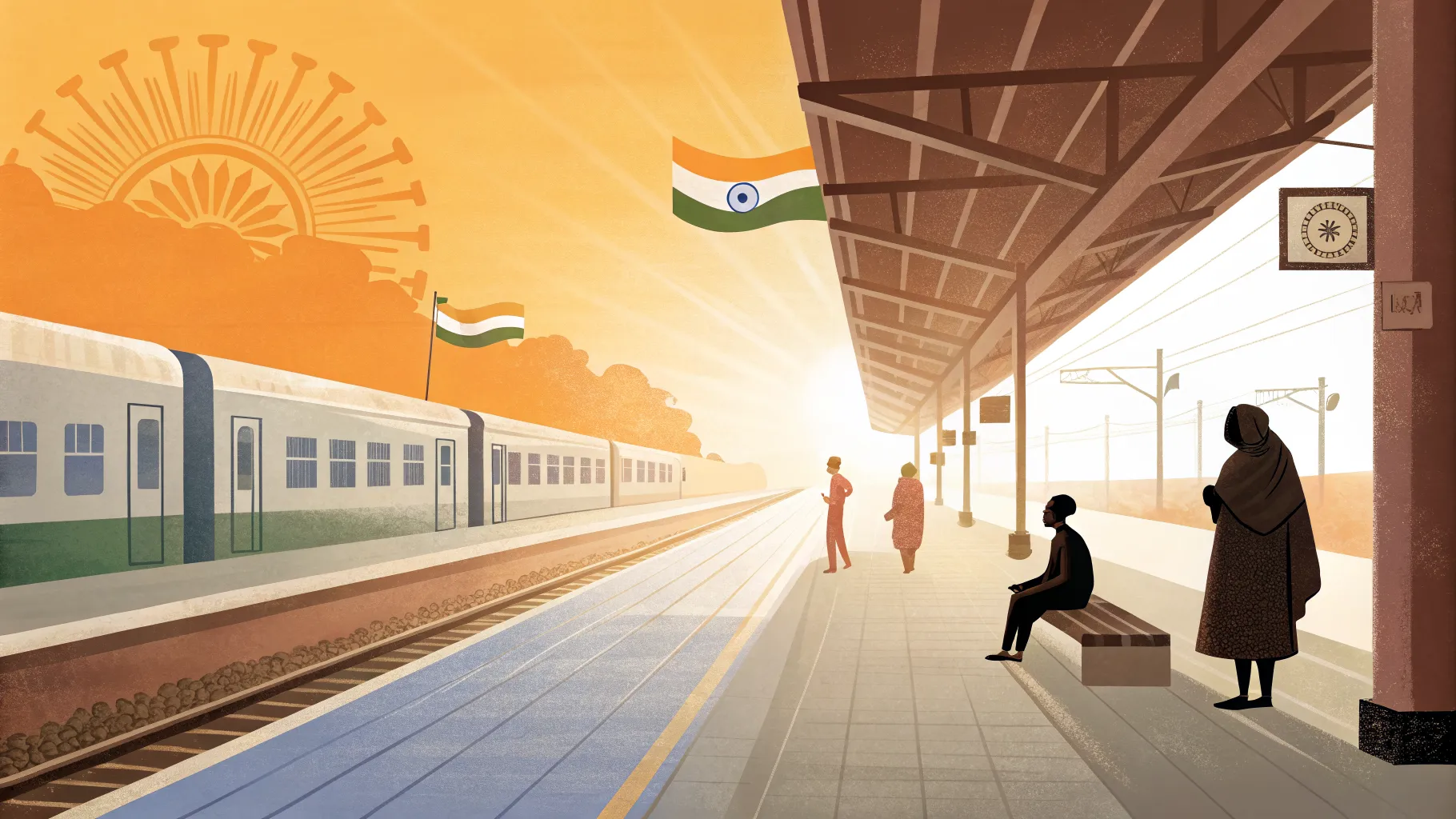

We talk a lot about success, money and status. But the moment that changed my view of happiness didn’t happen in a boardroom. This happened at a train station in India. The lesson was simple and difficult at the same time: happiness is an inside job.
I went there as a high school student in the early 2000s. The trip was not a vacation. It was a month and a half of teaching and learning. What I saw challenged all the stories I had told myself about what people needed to feel good.
What India Taught Me About Happiness
In 2003 and 2004, polio was still present. I remember children using cardboard tied to their knees while they crawled and played. They laughed. They were smiling. It was raw and real, and it didn’t fit the storyline that money equals joy.
“Polio still existed… There were children with cardboard stuck to their knees crawling around smiling and playing and having fun. » —Erik Huberman
It is common to compare poverty in different places. This comparison misses the deepest human truth. People can carry joy even in difficulties. This does not erase the struggle and does not mean that anyone should accept it. This means that emotional wealth does not always correspond to material wealth.
I’ve also heard opinions about karma and reincarnation that some people used to explain class and luck. It was new to me. I do not claim to speak for any country or religion as a whole, nor will I impose a single belief on millions of people. What struck me was not a doctrine. It was the contrast: visible difficulties and visible joy, both at the same time.
“Seeing this, we realize that happiness…comes from within. » —Erik Huberman
Rethinking Success and Struggle
As an entrepreneur, I have started and sold businesses. I achieved numbers that once seemed out of reach. None of this guaranteed peace. Winning is a pleasure, but it fades. What remains is how you see yourself and your day. This journey was clear: money solves money problems, it doesn’t matter.
There’s a common reluctance: Isn’t that easy to say if you’re not hungry or stressed? That’s right. Meeting basic needs is important. I don’t idealize loss and I don’t tell anyone to smile despite the pain. I say that after the basics, the line between happy and unhappy often runs through our habits, our stories, and our focus.
“I remember… at a train station, seeing people begging… then going to play, have fun and laugh.” —Erik Huberman
This moment hit me like a mirror. If joy can appear in a train station in the middle of a struggle, what is my excuse in an office with espresso and Wi-Fi? The truth stung. The good news is that it also liberated me. If I create my inner state, I don’t wait for an agreement to feel whole.
Build inner wealth, every day
Happiness is not passive. He is trained like a muscle. Small movements, stacked together, reshape the day. Here are simple practices that have changed my outlook and performance.
- Set a 60-second morning win: make your bed, stretch, or drink water.
- Write three lines: what I am grateful for and why it is important today.
- Move your body for 20 minutes. Walks matter.
- Set a non-negotiable task and complete it by noon.
- End with a quick reflection: what worked, what to fix tomorrow.
The goal is not perfection. These are repetitions. Over time, this creates a buffer between you and chaos. This stamp is peace. And paradoxically, this also improves performance. Customers, teams and investors feel constant energy. It’s getting worse.
The position
Happiness is built, not bought. Systems, not trails, protect it. Work can finance comfort, but it cannot bring you contentment. It’s up to us to do it. And it’s stimulating. Because it means your best days don’t depend on market cycles or someone else’s approval.
I left this trip with fewer excuses and more freedom of action. I always pursue big goals. I always like to win. But I no longer wait for the scoreboard to feel good about my day.
If you’re reading this, try a small habit tomorrow. Follow it for a week. Observe how your mood, patience, and focus change. Then stack on another habit. Build the internal engine that no market can take.
Success without inner wealth is a noisy void. Choose the quiet type that lasts.
Frequently Asked Questions
Q: Are you saying money doesn’t matter?
Money is important for essentials and security. After that, more income has a lesser effect on daily joy. Habits and mindset generate long-term satisfaction.
Q: How can I start creating “inner wealth” if life is chaotic?
Start small. One minute every morning for a quick victory. Add one habit per week. Keep it simple and consistent rather than grand and rare.
Q: Isn’t it disdainful to talk about happiness in poverty?
The goal is not to ignore difficulties. It’s about respecting human resilience while fighting for better conditions. We can hold both truths at once.
Q: What practices help entrepreneurs quickly reduce stress?
Short walks, breath work, single-task sprints, and clear daily priorities are helpful. Ending the day with a quick review allows for constant improvement.
Q: How can I stay motivated without tying value to results?
Measure the inputs you control: habits, effort and learning. Celebrate progress, not just results. The results follow consistency more than intensity.



