

Key takeaways
- The Hall of African Wildlife at the Houston Museum of Natural Science showcases the diversity of African ecosystems and species.
- The exhibition features more than 120 specimens representing more than 70 African animal species.
- Visitors can explore major African biomes, including the Serengeti, the Congo Basin and the Sahara Desert.
- Animals featured include the okapi, lowland gorilla, mandrill and African elephant.
- The exhibit combines wildlife education, conservation awareness and natural history for visitors of all ages.
Joel Bartsch is a longtime museum director and educator based in Houston, Texas, with decades of experience in museum leadership, conservation, and public science education. As president and CEO of the Houston Museum of Natural Science, Joel Bartsch helped guide the institution through significant growth in attendance, programming and public engagement. His career has included leadership and curatorial roles at organizations such as the California State Mining and Mineral Museum, the Texas Memorial Museum, and the Lyman House Memorial Museum. He also served as president of the Houston Museum District Association and was recognized for his contributions to mineralogy and museum science.
Through his continued leadership at HMNS, Joel Bartsch remains closely connected to exhibits that highlight science, wildlife and natural history, including the museum’s Frensley/Graham Hall of African Wildlife, which introduces visitors to the diverse ecosystems and species of Africa.
Explore African Wildlife at the Houston Museum of Natural Science
Founded in 1909, the Houston Museum of Natural Science (HMCS) is a 501(c)3 nonprofit organization dedicated to bringing science, art and education into the lives of millions of families, students and patrons around the world. Over the decades, the museum has acquired and developed numerous permanent venues and exhibitions, including the Frensley/Graham Hall of African Wildlife.
The HMNS Hall of African Wildlife offers museum visitors a comprehensive exploration of the incredible biodiversity that makes up the African continent, with portions of the exhibition dedicated to the region’s seven distinct biomes. While many visitors are eager to learn about the iconic biomes of the African savannah and grasslands, Africa also consists of sprawling deserts, lush forests, and more unique biomes that together account for 25% of the planet’s biodiversity. Highlights of the Hall of African Wildlife include the Congo Basin, the Sahara Desert and, of course, the Serengeti grasslands.
In total, the exhibition presents more than 120 specimens of more than 70 species, including the okapi, unique in its kind. Also known as the forest giraffe or zebra giraffe, the okapi is endemic to the northeastern Democratic Republic of Congo. The only other living member of the Giraffidae family, the okapi, is one of several African animals listed as endangered on the International Union for Conservation of Nature (IUCN) Red List of Threatened Species.
Primates found in the Hall of African Wildlife include the lowland gorilla, mandrill and several forest primates. Although considered the most numerous and widespread gorilla subspecies, the lowland gorilla is also critically endangered, according to the World Conservation Federation and IUCN, with a dwindling global population. Visitors to HMNS can appreciate the natural beauty and impressive size of the gorilla: also the largest subspecies of its family, the male lowland gorilla, also known as the silverback, can grow up to six feet tall and weigh up to 500 pounds.
The mandrill is much smaller than the lowland gorilla, although it is the largest ape in the world. HMNS guests will find their uniquely colored facial markings fascinating. Many visitors will recognize the mandrill as the basis of the character Rafiki in the Disney animated film, The Lion King. Male mandrills have a distinct bright red line that runs across the middle of their face, coloring their nose and upper lip, while the rest of their face is made up of blue, uniquely grooved skin, making them one of the most interesting faces in the animal kingdom.
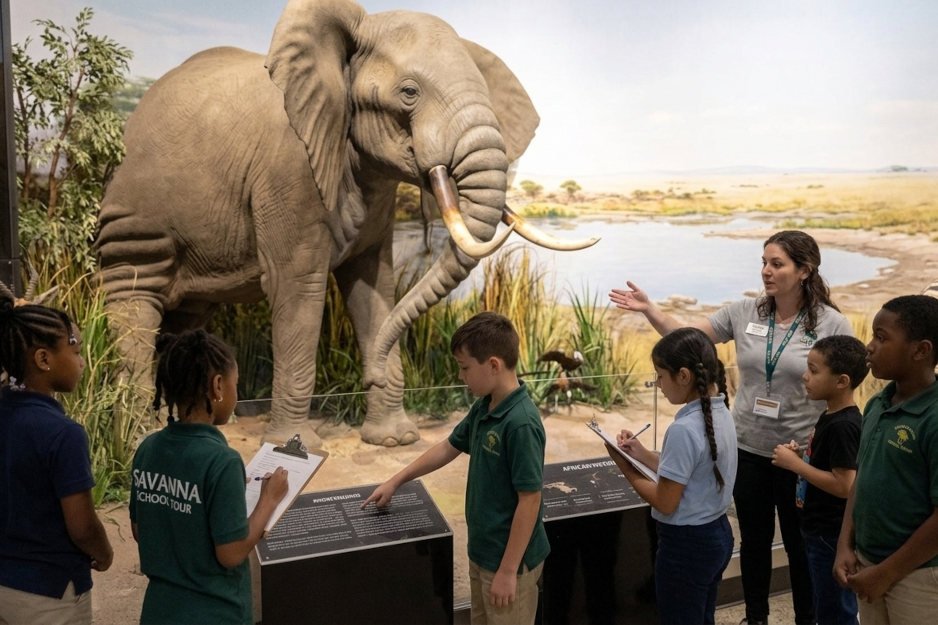
Some specimens require more floor space, notably the African elephant, which HMNS describes as “a symphony of force”. A symbol of wisdom in African culture, the elephant is a true marvel of natural engineering, equipped with a pair of incisor teeth, called tusks, which grow continuously throughout the animal’s life and a prehensile trunk made up of more than 40,000 muscles.
These represent a small fraction of the animals that children, students and other HMNS guests can learn about at the Frensley/Graham Hall of African Wildlife. Individuals can see large mammals, deadly predators, birds, reptiles and many other contributors to Africa’s enormous and complex ecosystem.
Located on Level 2, the Hall of African Wildlife is open during normal museum hours, 9:00 a.m. to 5:00 p.m. Museum visitors can also learn about local wildlife by visiting the Farish Hall of Texas Wildlife. More information about visiting HMNS and permanent and special exhibits is available online at hmns.org.
FAQs
What is the HMNS Hall of African Wildlife?
The Frensley/Graham Hall of African Wildlife is a permanent exhibit at the Houston Museum of Natural Science that showcases African ecosystems, biodiversity, and wildlife through detailed exhibits and preserved specimens.
What animals can visitors see in the exhibition?
Visitors can explore exhibits featuring animals such as the okapi, lowland gorilla, mandrill, African elephant, reptiles, birds and other species from across the African continent.
Which African biomes are presented in the exhibition?
The exhibit highlights several African biomes, including the Serengeti grasslands, the Congo Basin rainforest, and the Sahara Desert.
Why is okapi important?
The okapi is a rare and endangered species native to the Democratic Republic of Congo and is the giraffe’s only living relative.
When can visitors explore the Hall of African Wildlife?
The Hall of African Wildlife is open during regular Houston Museum of Natural Science hours, typically 9:00 a.m. to 5:00 p.m.
About Joël Bartsch
Joel Bartsch is president and CEO of the Houston Museum of Natural Science in Houston, Texas. During his museum career, he has held leadership, curatorial, and project management positions at several institutions, including the California State Mining and Mineral Museum and the Lyman House Memorial Museum. Joel Bartsch holds a Master of Arts in History and History of Science from Rice University and a Bachelor of Arts in Seminary Studies from Concordia University. He also served as president of the Houston Museum District Association.



