
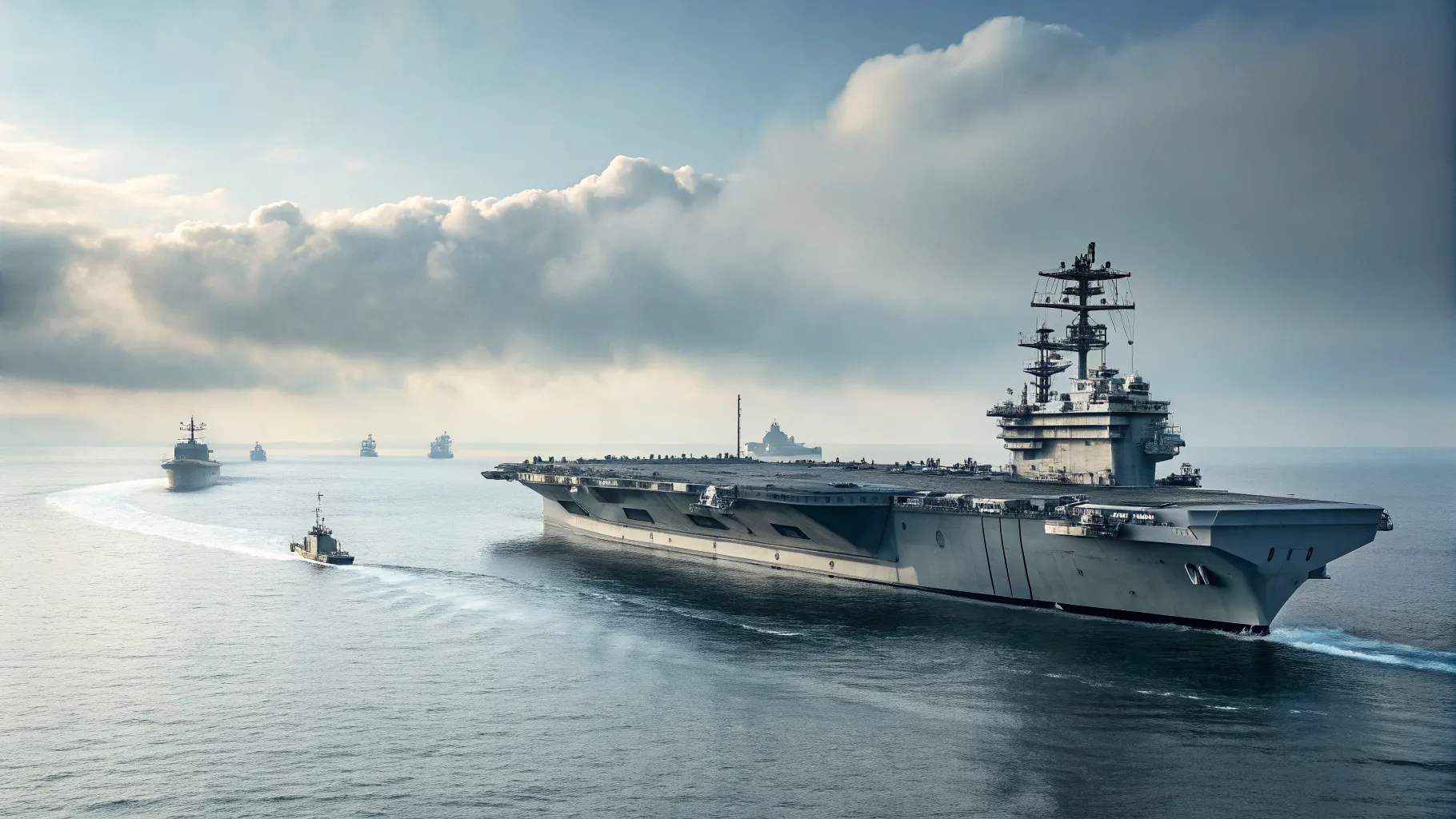

The US Navy’s most advanced aircraft carrier, the USS Gerald R. Fordcould return home after more than 300 days at sea, a move that could leave a void in the U.S. military presence in the Middle East. This potential redeployment comes as regional tensions remain high and maritime security challenges persist through key choke points.
The prospect of a withdrawal raises questions about how Washington will manage deterrence, protect shipping lanes and support partners if one of its biggest assets leaves the area.
What it means when a carrier leaves
“The USS Gerald R. Ford may return to the United States, ending its more than 300-day deployment, but doing so would reduce the U.S. force in the Middle East. »
A single U.S. carrier strike group brings a floating air base, missile defense, and command and control capabilities. A typical air wing consists of around 60 or more aircraft covering strikes, electronic warfare and airborne early warning. Destroyers and cruisers provide air and missile defense. Submarines add underwater range.
Removing such training from the region would likely reduce rapid response options against missile launches, drone attacks and threats to shipping. It would also ease pressure on crews who have faced extended missions and tight maintenance schedules.
Regional context and recent history
U.S. carriers have been rotating through the Middle East for decades to deter Iran, support the fight against terrorism and keep sea lanes open. The Navy often increases its number of aircraft carriers during crises and then reduces its workforce to balance global demands and shipyard work.
In recent years, attacks on commercial ships, proxy rocket attacks and cross-border tensions have kept the Eastern Mediterranean, Red Sea and Gulf on edge. Air and missile defenses on surface ships intercepted drones and missiles targeting maritime traffic and partner territories.
Strategic compromises
Analysts say Washington faces a familiar choice: maintain a continued, costly carrier presence or rely more on ground assets and allied navies.
- Advantages of a carrier: mobility, flexibility and independent air power at sea.
- Costs: crew fatigue, deferred maintenance and fewer carriers available for other theaters.
- Alternatives: land planes, amphibious readiness groups and allied patrols.
Rotations also shape perceptions. A sustained presence of the carrier signals commitment. Even a brief gap can prompt hostile actors to test. Yet overuse can erode readiness and widen future gaps.
Possible filling options
The Pentagon could replace the Ford with another carrier strike group or increase flights from regional bases. Amphibious ships equipped with maritime aviation units can cover some missions, but not on the same scale. Allied partners may intensify patrols and convoy escorts, depending on the threat situation.
Commercial marine insurers and energy markets often monitor these developments. Any hint of reduced protection in waterways such as Bab el-Mandeb or the Strait of Hormuz can increase risk premiums and complicate trade routes.
Military readiness and crew welfare
Prolonged deployments put a strain on sailors and air crews. The Navy has been trying to stabilize its schedules after years of peak operations. Returning the Ford would allow for maintenance, training and upgrades that would keep the ship efficient in the long term.
Leaders often weigh short-term deterrence against the long-term health of the fleet. A rested crew and fully equipped carrier can deter more reliably than a ship held on station beyond safety limits.
What to watch next
Signals to watch for include whether another carrier receives orders in the region, increased allied naval patrols, and any changes in the pace of drone or missile attacks on ships. Regional partners will also seek continued U.S. air and missile defense support, regardless of the platform that provides it.
If the Ford leaves without a replacement, expect a greater role for land-based aircraft and land-based missile defense systems. If a replacement arrives, continuity of deterrence can be preserved, but at the cost of additional pressure on the carrier fleet.
The immediate conclusion is clear: Bringing the Ford home would ease pressure on sailors and maintain long-term readiness, but it would also weaken short-term deterrence. The balance Washington strikes in the coming weeks will shape maritime security and partner confidence in the Middle East.



