
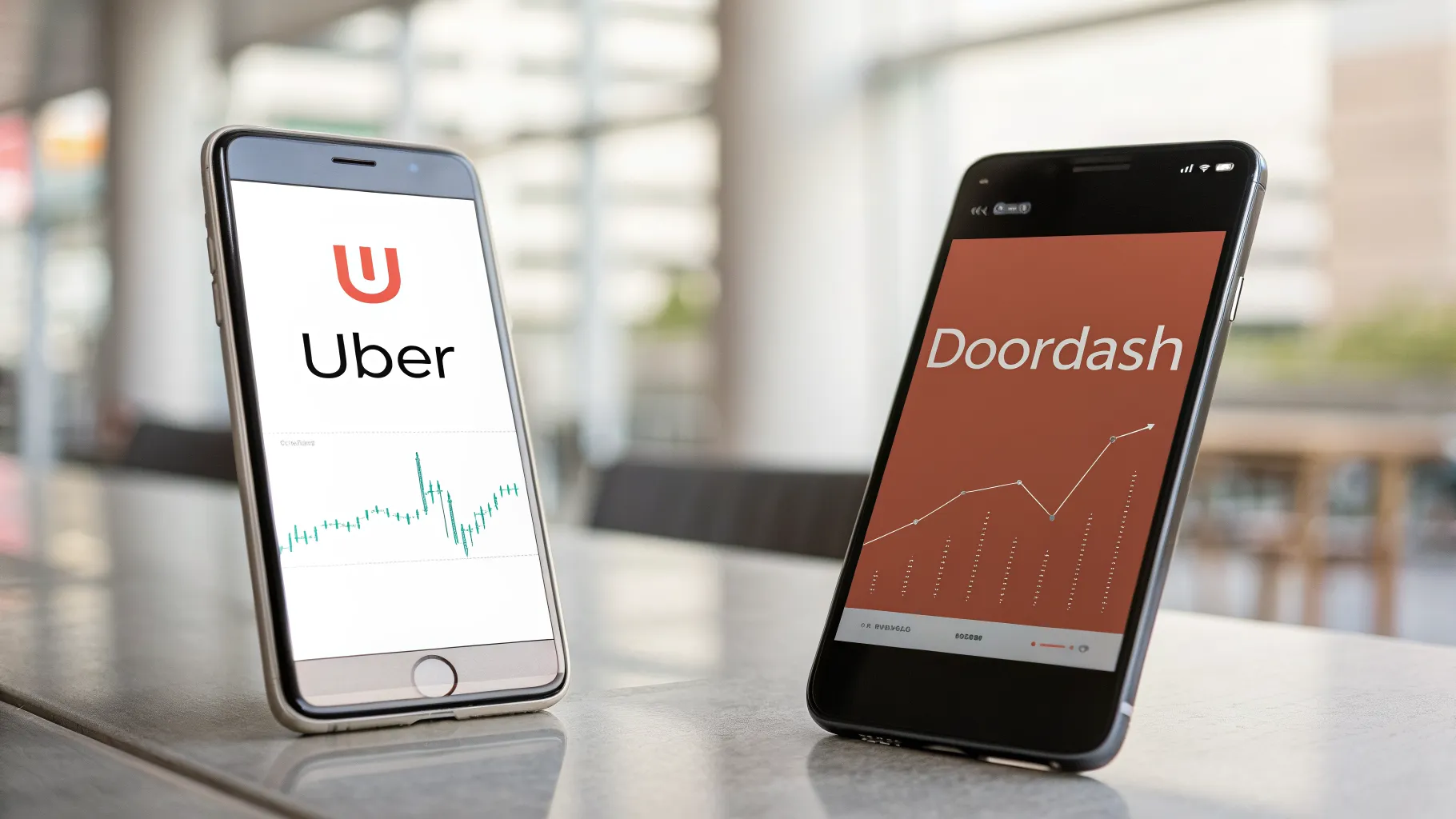

Shares of Uber and DoorDash have fallen this year even as riders and customers continue to use their apps at a high rate. The pullback has intrigued some investors and raised questions about how Wall Street values the largest on-demand economy platforms. The moves come as both companies report stable demand, active users at or near record highs, and continued expansion into new services.
Uber and DoorDash shares have fallen this year despite strong overall demand for app-based food ordering and rides.
The disconnect between healthy utilization and lower stock prices reflects concerns about costs, regulation and the path to stable profits. It also signals a shift in investor focus from growth at all costs to growth that translates into free cash flow. With interest rates still high and competition intense, the market is demanding clearer evidence that scale will generate more consistent profits.
Why stocks are in trouble
Analysts point to a familiar set of pressures. Incentives for drivers and couriers can increase when supply tightens, reducing margins. Insurance and security costs remain significant items. In larger cities, minimum wage rules and fee guidelines add to compliance work and can affect prices. Delivery demand is strong, but order size and frequency may stabilize after holiday peaks, dampening revenue growth.
Investors are also rethinking valuations after a long period of bullishness for app-based companies. The market now rewards companies that show repeatable profits, not just quick gains in revenue. This means that small lapses or cautious outlooks can hit stock prices hard, even when user trends appear strong.
- Higher incentives for drivers and couriers can put pressure on margins.
- Regulatory changes add complexity and potential costs.
- Rising insurance and compliance expenses are weighing on profits.
- Resetting valuations favors stable free cash flow rather than pure growth.
Demand remains firm
Rides have largely recovered from the pandemic era, with trips to the airport and events leading to peak times. Food delivery continues to serve households and offices, aided by memberships that reduce fees and wait times. Both companies are turning to advertising on their apps, which can generate higher-margin revenue without the need for more drivers or couriers.
DoorDash has expanded grocery, convenience and retail delivery to reduce reliance on restaurants. Uber has delved deeper into freight and same-day logistics while continuing to improve wait times and tools for drivers. These measures aim to mitigate seasonality and increase profitability per transaction.
Political and competition risks
Rules around worker classification remain a swing factor. Some jurisdictions call for more benefits and guaranteed wages, while others preserve contractor status with minimum standards. Each shift can change cost structures and pricing. City-level caps and fee disclosure further shape how platforms share costs with restaurants and patrons.
Competition also matters. In races, prices and wait times often determine which app wins the ride. When it comes to delivery, restaurants juggle multiple platforms and users opt for promotions. Advertisements, subscriptions and operational efficiencies have become key tools for retaining customers while limiting incentives.
What could transform the feeling
To regain momentum, both companies may need to show clearer progress in margins and cash generation during the remainder of the year. It would be useful to prove that advertising, memberships and logistics increase profits without large subsidies. Stable or declining incentive rates, combined with better route density and bulk deliveries, could also support earnings quality.
Investors will watch for updates on:
- Margin trends in shopping versus delivery.
- High-margin advertising revenue growth.
- Impact of city and state compensation rules on prices and volume.
- Capital allocation, including buybacks or debt repayment.
Outlook
High demand is not the problem. The market wants more stable earnings and less political uncertainty. If Uber and DoorDash can keep users engaged while controlling costs, the gap between app usage and stock performance could narrow. But if incentives increase or new rules increase spending faster than prices can adjust, the pressure may persist.
For now, the story revolves around execution against a backdrop of tighter financial expectations. Upcoming earnings cycles, along with regulatory developments in key cities, will likely set the tone for the rest of the year. Investors are awaiting proof that product expansion and scale-up can translate into sustainable, cash-generating growth.



