
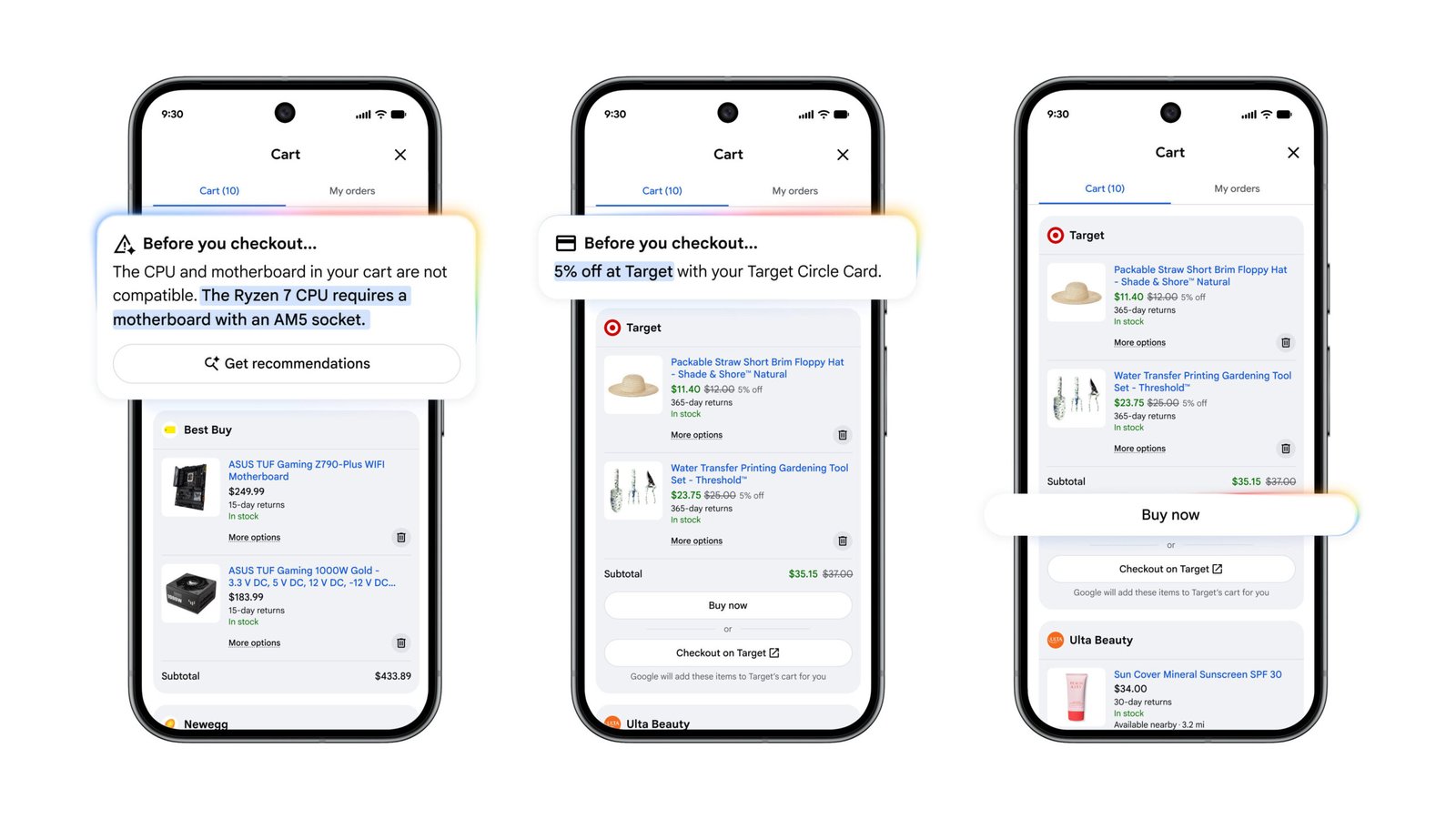
Google used its I/O 2026 event to introduce Universal Cart, a new AI-powered shopping experience designed to work across Search, Gemini, YouTube, Gmail and participating merchants.
The announcement marks another major step in Google’s broader push toward “agent commerce,” in which AI systems do more than recommend products. Instead, they actively help users manage their purchasing decisions, monitor prices, search for deals, and potentially make purchases on their behalf.
Universal Cart also builds on Google’s expanding Universal Commerce Protocol (UCP), which the company described as a shared infrastructure layer intended to make cross-platform shopping and payments more seamless.
While many marketers have focused heavily on AI-powered search experiences over the past year, this launch suggests that Google is also focused on turning AI into a transactional commerce layer.
Universal Cart turns shopping into a persistent AI experience
According to Google, Universal trolley functions as a smart shopping cart that tracks users across Google properties and participating merchants.
Users can add products while browsing Google Search, chatting with Gemini, watching YouTube, or even reading Gmail. Once products are added, the system continuously runs in the background to monitor deals, price drops, stock availability and purchasing opportunities.
Google says the experience is powered by Gemini models and will continue to improve as models evolve.
One of the most notable elements of the launch is how Google is positioning Universal Cart aggressively rather than reactively.
The company says the shopping cart can identify product incompatibilities, suggest alternatives, surface loyalty benefits and automatically recommend savings opportunities.

Google also confirmed that the system integrates with Google Wallet, allowing the shopping cart to reference payment methods, loyalty programs and merchant offers during the purchasing process.
Some of these payment features will roll out this summer to major merchants, including Nike, Sephora, Target, Ulta Beauty, Walmart, Wayfair and other Shopify merchants.

For users making more complex purchases, such as custom PCs with parts from multiple retailers, Google says the shopping cart can help validate compatibility issues before checkout.
Google expands Universal Commerce Protocol
The launch of Universal Cart is also a major expansion of Google’s Universal Commerce Protocol initiative.
Google first introduced UCP earlier this year as a common language for business systems and AI agents. At I/O, the company confirmed that the protocol is already gaining adoption among retailers and technology partners.
Google says UCP helps make the payment process easier for merchants while allowing brands to remain the merchant of record.
The company also announced several protocol-related geographic and vertical expansions:
- The UCP payment system is expanding to Canada and Australia, with the UK planned later.
- UCP comes to YouTube in the United States
- Google plans to expand into other commerce categories, including hotel reservations and local food delivery.
This part of the ad may ultimately be more important to advertisers and retailers than the shopping cart itself.
Google appears to be building a commerce infrastructure layer that connects discovery, purchasing behavior, checkout, payments, and AI agents into a single ecosystem.
For retailers already investing heavily in Merchant Center feeds, product data quality, and omnichannel commerce experiences, this likely increases the importance of structured product information even further.
What this means for advertisers and retailers
Universal Cart is another strong signal that Google wants shoppers to spend more of the shopping journey within Google-owned experiences.
Historically, Google Search primarily redirected users to retailer websites. Universal Cart is starting to bring more of that business back into Google itself.
Now, Google is positioning its platforms as the place where users discover products, compare options, monitor prices, manage shopping carts and potentially make purchases.
This creates both opportunities and new challenges for advertisers.
Retailers with strong product feeds, accurate inventory data, loyalty integrations, and competitive pricing can benefit from greater visibility into these experiences.
This also increases the importance of Merchant Center optimization beyond traditional Shopping campaigns.
Product data is increasingly becoming the basis for how products appear on AI-powered discovery surfaces.
The YouTube extension also stands out to me.
Google continues to tie video engagement more closely to purchasing behavior and payment infrastructure. This could create more pressure on brands to view YouTube as an e-commerce channel, not just a video outreach platform.
From a measurement perspective: If more shopping activity occurs in Google interfaces, advertisers may need to rethink how they evaluate attribution, assisted conversions, and customer journey reporting across all channels.
Looking to the future
Universal Cart is in its infancy and many of the more advanced agent commerce features will likely take time to mature.
Still, this announcement offers a clearer picture of the direction Google appears to be taking when it comes to purchasing.
The company is moving beyond AI-enhanced product discovery and looking deeper into the purchasing journey itself.
From product recommendations and shopping cart management to pricing information and payment infrastructure, Google is steadily increasing the portion of the shopping process that takes place within its own platforms.
For advertisers and retailers, this could ultimately change much more than just where ads appear.
It can also change how brands measure influence, attribute conversions, and compete for viewability during the purchase journey.
Featured image: Courtesy of Google, May 2026



