

For years, email performance has been measured using a set of known metrics: opens, clicks, and conversions.
But these numbers are becoming less useful, not only because of changes in privacy, but also because mailbox providers (MBPs) now judge emails the same way users do: based on engagement, trust, and intent.
This shift is forcing marketers to rethink how they measure success.
A new report from Validity highlights three emerging metrics that are likely to become mainstream in 2026 – and they say more about subscriber relationships than traditional KPIs ever could.
1. The churn index signals when audiences are losing interest
The first measure turns the usual performance mentality on its head.
Instead of focusing on positive engagement, the Churn Index measures signals that an audience is losing interest, combining unsubscribes, complaints, and bounces into a single metric.

In other words, it answers a question most dashboards ignore: How quickly do you burn through your audience?
This is important because inbox providers increasingly treat negative signals as stronger indicators than positive signals. A campaign with decent click-through rates can still hurt deliverability if it generates enough complaints or unsubscribes.
The takeaway for marketers is simple: optimizing just for clicks isn’t enough. Long-lasting performance depends on reducing friction and fatigue over time.
2. Response rate is the true measure of engagement
Clicks may be accidental. Openings are often unreliable. Responses, on the other hand, require intention.
This is why response rate emerges as a key engagement signal. In the report’s example, even a 1% response rate represents a significant level of audience investment: these are subscribers who care enough to respond.
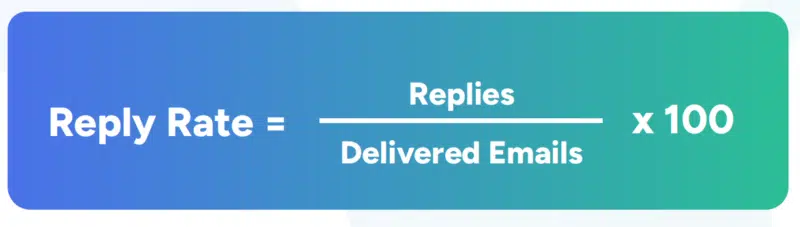
Mailbox providers increasingly interpret this type of interaction as a strong signal of trust. Emails that invite and generate responses are more likely to be considered relevant and placed accordingly in the inbox.
This has practical implications for email strategy. Campaigns are starting to feel less like broadcasts and more like conversations, with prompts for comments, questions, or direct responses integrated into the content.
This also introduces operational challenges. As response volume increases, more teams are turning to automation or AI agents to manage responses at scale, effectively combining email marketing and customer support.
3. Quantify trust
“Building trust” has long been a marketing cliché. What changes is the attempt to measure it.
The report describes a trustworthiness framework that combines credibility, trustworthiness, and intimacy, adjusted for the appearance of a self-centered brand.

Although subjective, these components closely match how subscribers rate emails:
- Credibility: Does this sender know what he is talking about?
- Reliability: Do they consistently follow through?
- Privacy: Do I feel safe interacting with them?
- Self-orientation: Is this about me, or just them?
The challenge is turning them into actionable metrics. Suggested approaches include tracking responses, monitoring complaint rates, encouraging preference updates, and actively collecting feedback.
What’s remarkable is that trust can move in either direction – and negative signals often carry more weight.
Your customers are searching everywhere. Make sure your brand introduces himself.
The SEO toolkit you know, plus the AI visibility data you need.
Start free trial
Start with

Moving from campaign metrics to relational metrics
Together, these three metrics reflect a broader shift in email marketing.
Performance is no longer limited to what happens immediately after a shipment. It’s about how recipients perceive and interact with a brand over time.
This matches how mailbox providers now filter inboxes. Engagement is not just measured, it is interpreted. And the signals they prioritize increasingly look like relationship health, not campaign performance.
For marketers, this means that success is becoming increasingly difficult to play for.
And that’s probably the point.
Validity Link to 2026 Email Benchmark Report. (Registration required)



