
- By
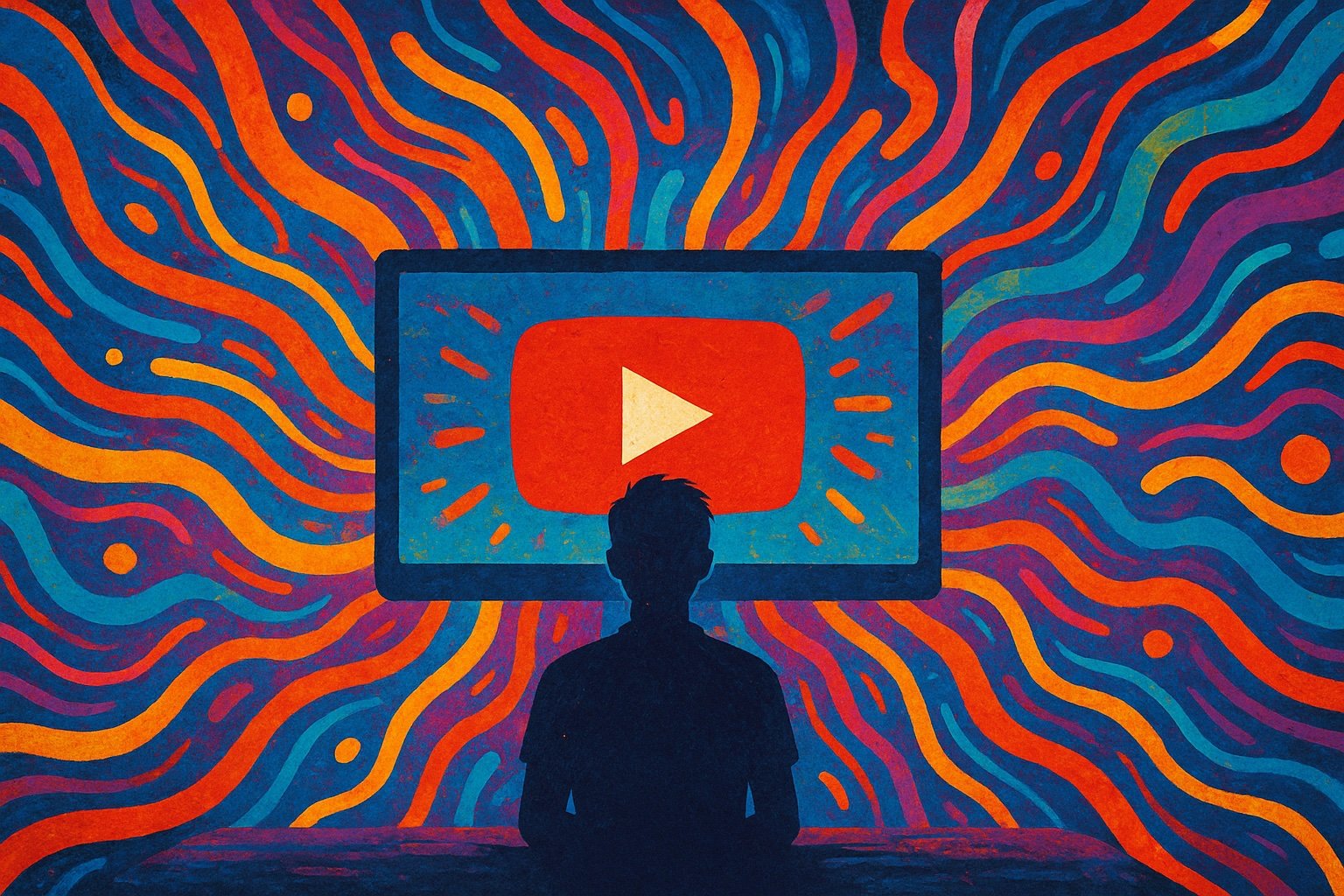
The way humans consume information is about to undergo a more dramatic transformation than at any time since the invention of the printing press. Text and reading give way to audio, video, and endless scrolling streams. Platforms like YouTube and TikTok already dominate the way billions of people learn, laugh, and argue — and as artificial intelligence makes these platforms smarter, faster, and more personalized, they will dominate even more completely.
But it’s not just a change in format. It is a change in what survives. Algorithms do not reward diversity, nuance, or depth. They reward everything you watch. And as human attention is limited, forms of media that don’t generate the most powerful chemical hooks – the dopamine hits, the emotional triggers, the cliffhangers – will slowly disappear.
What will be left will be a cultural monoculture: optimized for addiction, shaped by invisible algorithms, and vulnerable to government influence. This is not a possibility. This is the trajectory we are already on. And if this continues, 99% of today’s media landscape could soon become unrecognizable.
Media has always evolved under selective pressure. Printing prioritizes brevity and reproducibility. Radio elevated immediacy and voice. Special television spectacle. Each media has chosen certain forms and left others behind.
Now, digital platforms powered by recommendation algorithms are accelerating this process. Content doesn’t just compete for shelf space or airtime on a program; he participates in a Darwinian arena in real timewhere only the most clickable and watchable survive.
- If a ten-minute explanation generates more viewing time than a dense 2,000-word essay, the algorithm will favor the video.
- If fast-paced, emotionally charged content outperforms slow, contemplative lessons, the latter sink into obscurity.
- If a format generates more advertising revenue, creators naturally migrate to it.
The result is convergence: a narrowing of media forms toward those that most effectively capture and hold attention. Over time, formats that don’t compete for engagement become economically unviable. The vast majority of today’s media could disappear from mainstream consumption, leaving only the most addictive survivors.
2. Loss of diversity
This convergence entails cultural costs. Just as agricultural monocultures are prone to collapse, media monocultures erode resilience and wealth.
- Thoughtful essays, in-depth lectures, and nuanced debates risks becoming marginal – appreciated by a few elites or amateurs but absent from the attention of the general public.
- Entertainment will overshadow education. Platforms may present themselves as “edutainment,” but selection pressure ensures entertainment dominance.
- Cultural flattening is accelerating. Global recommendation engines reward formats that cross borders well, leading to a homogenized global culture optimized for watch time rather than depth.
In other words: 99% of what we have today – the wide variety of formats, voices and rhythms – may not literally disappear, but it could become useless.
3. Cognitive costs
A media ecosystem designed to maximize engagement is reshaping not only what we consume, but how we think.
- Attention span compression: As fast-paced, emotionally intense content becomes the norm, patience for slow, abstract reasoning erodes.
- Loss of epistemic resilience: Societies trained in algorithmically curated audiovisual infotainment are losing habits of cross-referencing, critical reading, and reflexive doubt.
- Parasocial saturation: The most engaging content often relies on personalities, faces, and emotional storytelling, creating an environment where parasocial connections replace community and influencers replace educators.
The change is not just cultural but neurological. Human attention is limited; once colonized by algorithmic feeds, there is less capacity left for close reading, sustained reflection, or contemplation.
4. The AI factor
AI intensifies this trajectory. Today, algorithms recommend content. Tomorrow they will generate it.
Imagine infinite personalized feeds where:
- Synthetic anchors deliver stories in the tone, style and emotional cadence you respond to most.
- Educational videos are automatically generated with graphics, analogies, and pacing tailored to your psychology.
- The fun never runs out: each scroll brings freshly created content that feels “made for you.”
This eliminates production costs as a limiting factor. Niche, slow or low-engagement formats no longer survive thanks to passionate creators; instead, All competes in the same algorithmically optimized arena. AI doesn’t just accelerate shrinkage: it makes it inevitable.
5. Government influence: the new propaganda
If economic pressures shape what survives, political pressures shape what is promoted.
Governments have always sought to control the media – from state newspapers to broadcast licenses to war propaganda. But centralized algorithmic platforms create a tool more powerful and subtle than anything in history.
- Shared interests: Governments want stability, platforms want growth. Both can benefit from encouraging citizens to adopt “acceptable” discourses.
- Invisible conservation: Unlike overt censorship, algorithmic suppression and amplification are invisible. A dissenting voice does not disappear; it simply fails to surface. Most users never notice it.
- Hyper-personalized propaganda: Using AI, governments can (directly or indirectly) tailor their narratives not only to demographics, but also to individual psychological profiles. It’s Cambridge Analytica on steroids.
In authoritarian systems, it becomes a tool of control. In democracies, this can be justified by the fight against “disinformation”, “polarization” or “extremism”. Either way, the line between education and manipulation is blurring.
6. Will anything survive?
If the general public is reduced to addictive formats under both economic and political pressure, does that mean we will lose 99% of media forever? Not entirely. Some counterforces could preserve diversity:
- Elites and institutions will always need long writing and complex thinking to function. Universities, think tanks and professionals cannot rely on memes and short films alone.
- Public service content can be preserved through regulation, subsidies or cultural policy – just as libraries and public broadcasters have survived market forces that would have erased them.
- Countercultures can deliberately resist algorithmic flows, supporting the written press, independent media or decentralized networks for the sake of identity.
- Technological decentralization (like blockchain media, federated platforms or open source recommendation engines) could break the monopoly.
However, in terms of share of attentionthe overwhelming majority may turn to addictive monoculture. The survival of alternative forms today can resemble vinyl records or poetry: cherished, but peripheral.
7. The precedent – and the difference
History offers parallels. Printing killed most handwritten traditions. Centralized speech on the radio. Television has transformed politics into image and performance. In each case, something was lost and something new was gained.
But there is a difference this time: scale and precision. Never before has a single platform had the power to shape what billions of people see every day, tailored to their psychology, updated in real time and optimized by machines. Selective pressure is not slow, like the diffusion of books or radio; it is instantaneous, global and accelerates.
Conclusion: a shrinking future
We may be entering a future where human attention is channeled to a few dominant platforms, reduced to addictive formats, and subtly directed by governments. In such a world, the cultural landscape could shrink considerably, allowing only the most visible and politically practical content to flourish.
The danger is not that dissent will disappear, nor that education will disappear, or that alternative forms will be banned. The danger is more subtle: that they become invisible, unprofitable, or irrelevant to most people’s lives.
So the question is not whether algorithms will shape the future of media – they already are. The question is whether societies will accept this shrinkage as inevitable or whether they will struggle to preserve the messy, diverse, and sometimes ineffective ecosystem of thought that has always been the foundation of human freedom.
Related reading:




