

Most in-flight meetings fail before takeoff. People board with free intentions, open laptops and let time drift. Three hours disappear quickly when no one owns the result. For private charter clients, this is lost ground. The cabin is one of the few places where the decision-makers are together uninterrupted, somewhere between New York and Miami, with nowhere else. Used correctly, this window can replace an entire session in a conference room.
Why a private jet changes the dynamic
If you tried to have a real strategic conversation on a commercial flight you’ll know it’s almost impossible because the noise, lack of privacy and constant movement shuts it down. A charter plane does away with all that: you decide who is in the room, how the space is set up and when the conversation begins. No late arrivals and no outside distractions. This change alone changes how direct people are willing to be.
It also removes the hierarchical barriers that often exist in formal boardrooms. In a confined, neutral environment like a cabin, conversations tend to become more frank and results-oriented rather than political. Senior leaders and team members are more likely to speak clearly, which accelerates alignment and reduces ambiguity.
Set a clear goal before takeoff
The strongest in-flight encounters are decided before boarding. Not the result, but the objective. A clear objective. This could be securing a funding round, agreeing a hiring plan or pressure testing a new market entry. Beyond that, the discussion loses shape. Send a brief briefing in advance so everyone comes prepared. When the cabin door closes, the group should already know what needs to be resolved.
A concise pre-flight memo of no more than one page can significantly improve efficiency. It should describe the objective, key data points and required decisions. This eliminates the need for lengthy contextual discussions once in flight, allowing the team to move straight into analysis and decision-making.
Design the discussion booth
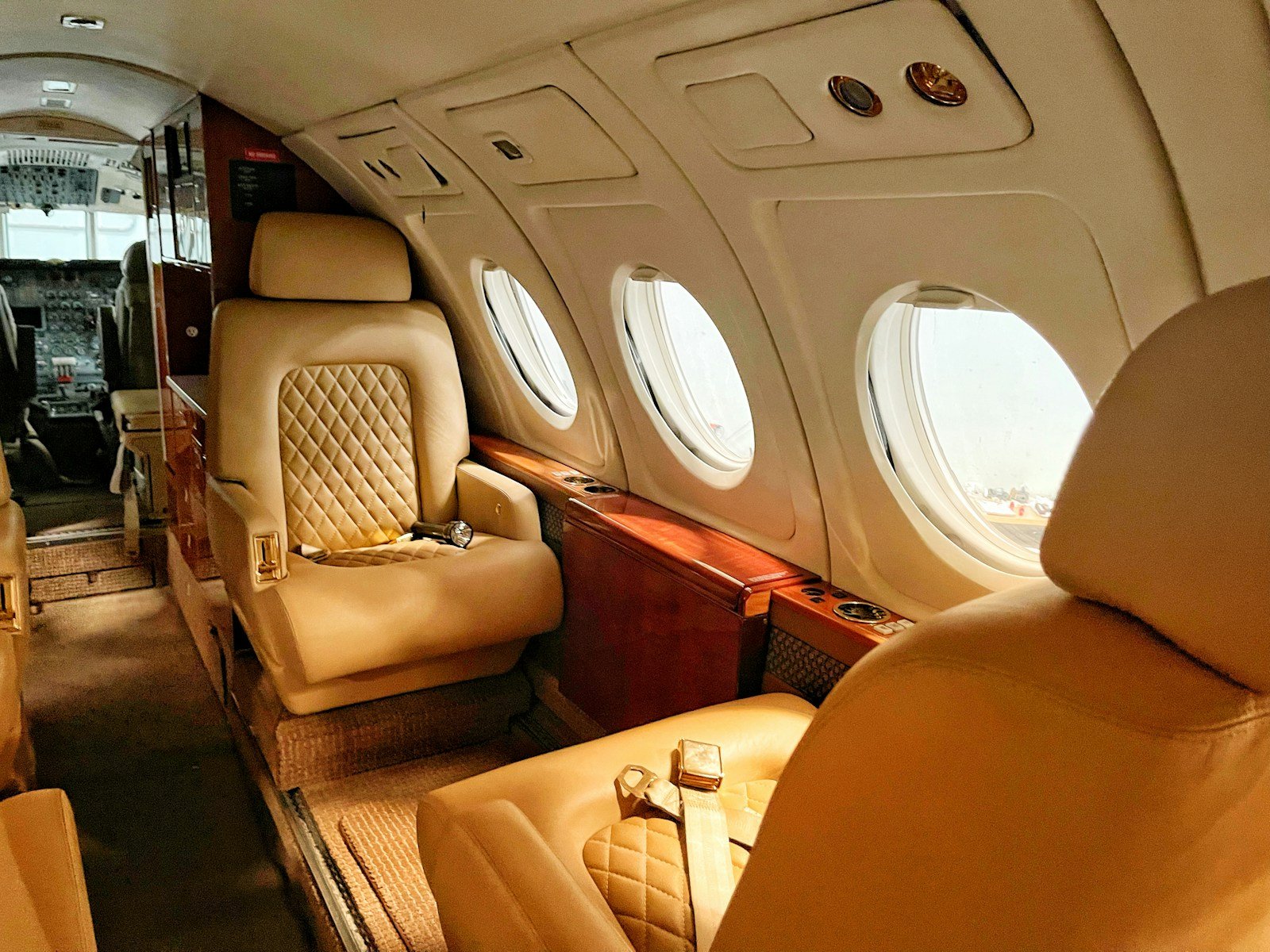
The seats are not a small detail. A face-to-face setup participation changes immediately, while forward-facing rows create passive listeners. Most mid-size and heavy-duty jets offer conference-style amenities, but they must be used deliberately. Place decision-makers where they can engage directly and keep documents close at hand. Even the lighting matters more than expected, over three hours.
Keep the agenda tight and realistic
You don’t have unlimited time in the air. That’s the advantage. Instead of trying to cover everything, focus on one or two critical issues. Structure the flight into blocks. Review in the first hour, challenge assumptions in the second, and close out decisions before the descent. It’s simple, but it works because the end point is fixed.
What tends to go wrong is overloading the agenda. Someone adds “quick updates” or a side topic, and suddenly the conversation loses momentum. Keep him disciplined. If he doesn’t directly support the primary objective, he has no place on this flight. There will be time for that later.
Use the environment to encourage concentration
At cruising altitude, it is not possible to exit to answer another call. It’s useful. This brings attention back to the table. Wi-Fi is available on many planes, but the best teams agree early on how it will be used, or not at all. A CEO I worked with set a rule: no devices for the first 90 minutes. The quality of the discussion changes almost immediately.
Bring the right tools, not more tools
You don’t need a full presentation setup in the air. In fact, it usually slows things down. A tablet with key documents, a split screen if available and printed summaries are sufficient. What matters is clarity. One founder I know runs every fly-in meeting from a single printed sheet of basic numbers and assumptions. This keeps the conversation grounded and fast-paced.
Make decisions while momentum is high
Field meetings often end with vague next steps. In the air, this approach does not hold. The goal is to land with answers. Designate someone to capture key points and confirm agreements before the descent begins. If the team is still debating when the wheels land, the session has missed its objective.
This is where strong leadership is important. Someone has to call the present moment and say, “We decide now. » Not aggressively, just clearly. Without this impetus, even a well-structured discussion can stagnate. The Stealing Compulsion is only useful if someone is willing to use it.
In practice
The benefits of private air travel are subtle, but they make a big difference in practice. For example, a US-based investment team traveling from Los Angeles to Aspen could use this flight to finalize terms for an acquisition. With the benefits of a private flight, finances can be reviewed at an early stage, assumptions directly challenged and the decision can easily be made before landing. No follow-up meetings, no delays, and the agreement can move forward the same afternoon.
This is a trend we often see with teams that regularly book a private jet for short-haul travel. Travel becomes secondary. The real value lies in the uninterrupted time it takes to resolve high-stakes questions with the right people in the room.
Turn travel time into a competitive advantage
Time doesn’t get longer, but it can be used better. Private chartering already takes the friction out of traveling. Using this same window for a focused, high-level discussion goes further. Decisions are made faster, alignment is clearer and opportunities move forward without the usual lag. Over time, this turns into a real advantage.



