
\
AI search is quickly becoming a gatekeeper in B2B software purchasing. A new study found that 71% of buyers rely on AI chatbots at some point in the software research process, and 51% now start their search with an AI chatbot more often than with Google.
In G2’s report, “The Answer Economy: How AI Search is Rewiring B2B Software Buying,” AI chatbots are now the number one source influencing buyer shortlists at 54%, ahead of software review sites at 43% and vendor sites at 36%. In other words, many B2B buyers now receive a set of recommendations before even visiting your website or speaking to salespeople.
For marketers, this changes the visibility problem. You’re no longer just trying to rank, earn a click, or drive traffic. You’re trying to make sure the AI systems understand your product well enough to include it in the response in the first place.
The report’s message is pretty straightforward: If AI doesn’t surface to you early on, you may never be considered.

Visibility now starts inside the response
G2’s framework is useful because it treats AI visibility as a commercialization issue, not a research trend. The report states that visibility in AI search depends on getting the answer rather than getting the click, which is a significant shift for B2B teams still measuring success primarily through rankings, visits and page-level performance.
Research suggests that buyers have shifted from using search for reference to using AI for summary purposes. This means they’re not just wondering where to look. They ask AI tools to compare providers, summarize strengths and weaknesses, and return a usable recommendation within minutes.
Your customers are searching everywhere. Make sure your brand introduces himself.
The SEO toolkit you know, plus the AI visibility data you need.
Start free trial
Start with

Efficiency gains help explain why this behavior persists. G2 found that 53% of buyers say software research is more productive with AI search than traditional search, up from 36% seven months earlier, and 86% said they have increased their use of AI chatbots for software research over the past year.
This leaves marketers facing a more difficult truth than “optimize for AI.” If buyers form a first impression in the chatbot’s responses, then message clarity, category suitability, reviews, and third-party validation are all part of the AI’s ability to confidently describe and recommend you.
The shortlist is built earlier
The report takes this point further by showing how purchasing behavior has compressed. Buyers would spend hours or days creating comparison spreadsheets and refining a listing manually. Now, as G2 says, many are “one-shotting” the shortlist with a single chatbot prompt.
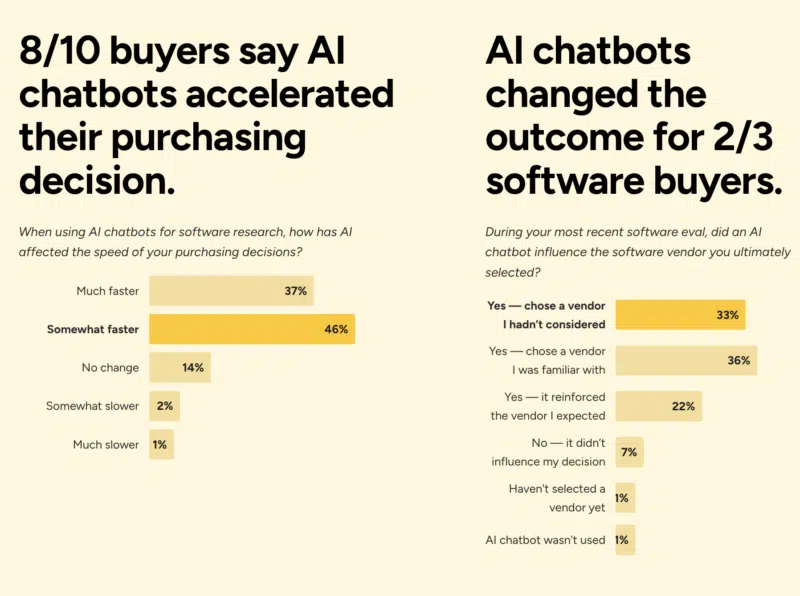
This is changing the competitive dynamic in B2B marketing, as pre-qualification used to happen after multiple touch points with suppliers. Now, this can happen before a vendor has generated an on-site visit, captured intent data, or triggered any of the signals marketers are accustomed to acting on.
It also increases the cost of poor positioning. G2 found that 69% of buyers said AI chatbots surfaced information that led them to choose a different supplier than expected, and 85% said they placed more importance on a supplier cited by the AI in a response. If your brand is misunderstood, missing, or poorly differentiated, AI can redirect the transaction before your team even knows it exists.
For marketers, the takeaway is not that traditional search or vendor websites stop being important. G2 notes that 80% of buyers still use Google at some point during their journey, but AI is now shaping discovery and shortlisting much earlier, meaning B2B visibility is less about being found everywhere and more about fully understanding where the AI is looking.
Link to report. (No registration required)



