
- By
When I first started tinkering with WordPress, the process was simple – almost disarming. You would create a site, log in via FTP and open the theme folder. Inside you’ll find a few familiar files: header.php, footer.php, style.css, functions.php. Nothing too scary.
And with just the most basic knowledge – a little HTML here, a little CSS there – you can change the overall look and feel of a site. Want a new background? Add it to the stylesheet. Want to reorganize a template? Mix HTML in index.php. If you’re feeling adventurous, you can paste a snippet of PHP that you barely understand into functions.php and I hope you haven’t taken it all apart.
It was complicated, of course. But it was amusing. We could learn by breaking things. You didn’t need to be a developer. You didn’t need a build process, or React, or Node. WordPress was accessible because its guts were right in front of you. The structure of a theme made sense. The barrier to entry was low.
This was one of the hidden strengths of WordPress: it wasn’t just a publishing tool, it was a gentle introduction to how the web itself worked.
Enter Block Themes and Site Editor
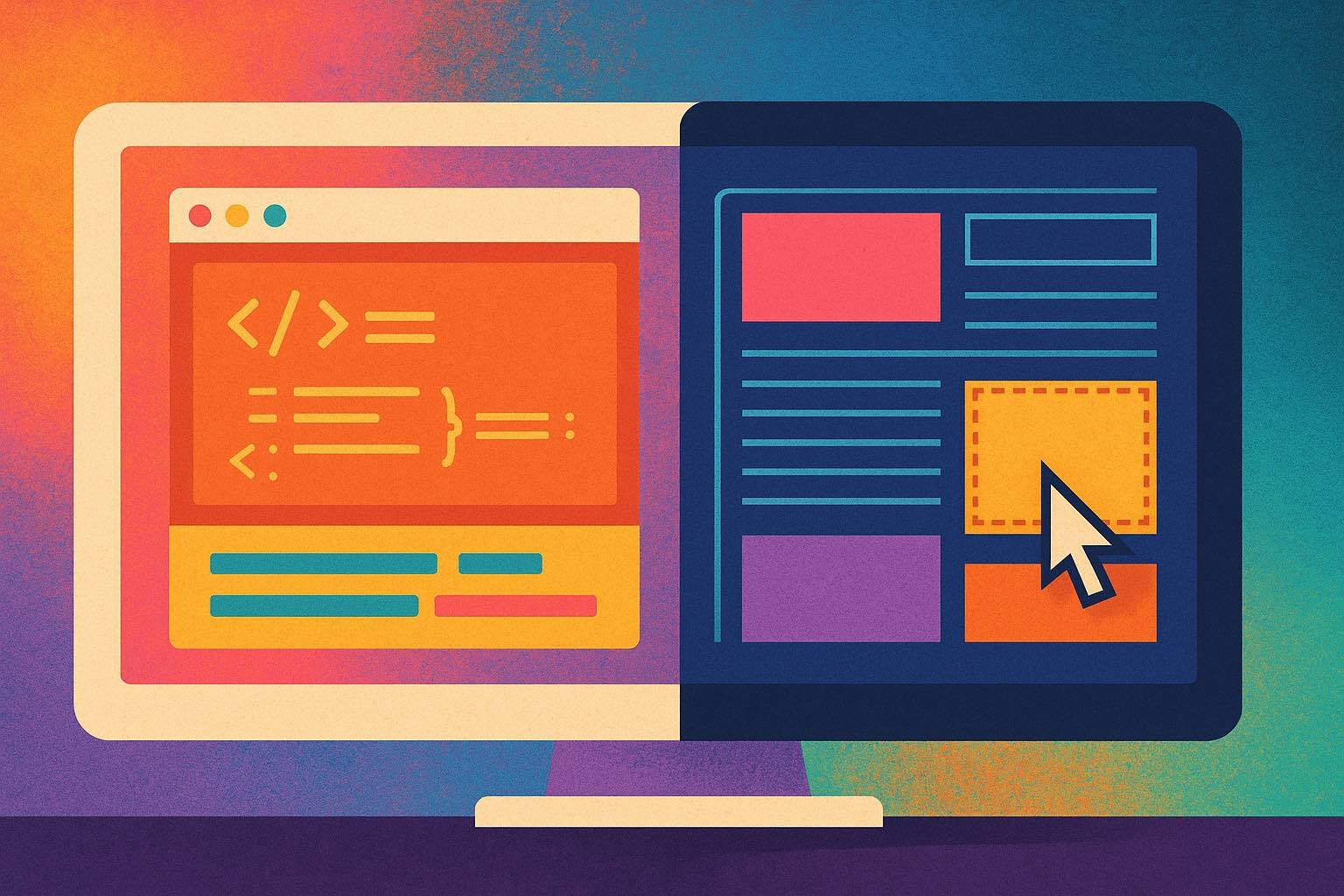
Fast forward to today, and the landscape is very different. WordPress has adopted block themes, Full Site Editing (FSE), and theme.json configuration file. The focus has shifted from “open a file and hack” to “design your site visually in the editor”.
On the surface, this is a huge step forward. The site editor is powerful. With blocks, you can rearrange layouts, add features, and style your site without touching a line of code. It’s easier than ever for a non-technical site owner to create something polished and professional.
But here is the other side of the coin: the old path, the one on which a beginner could open up style.css and are taught by trial and error – is more difficult to find. Block themes are more abstract. To understand what’s going on inside, you need more than just HTML and CSS. You should know how WordPress block markup works, how to configure global styles in JSON, and maybe even how to extend things with JavaScript.
In other words, the skills required to “hack” WordPress at the theme level have increased.
What we gained (and what we lost)
This isn’t necessarily a bad thing. WordPress had to evolve. Competing with tools like Webflow, Squarespace, and Wix meant making the experience more user-friendly, more visual, and more consistent. And for people who just want to build a site without ever seeing any code, WordPress is more accessible than ever.
But there is a trade-off. The old way was also accessible – but in a different sense. This gave people with even the slightest technical curiosity a starting point. You can dive in without needing to understand the big picture. You might learn the basics of the web almost by accident.
Today, WordPress is still accessible, but more as a product than a playground. It’s something you set up rather than something you take apart. This is progress in one sense, but it means that a certain type of tinkering spirit has less room to flourish.
A different access ramp
Do I miss the good old days? Not exactly. But I think about how different the learning journey is today. Back then, WordPress quietly acted as a teacher: if you wanted to improve the look of your site, you had to take a look under the hood and get your hands dirty.
Now, that same curiosity won’t get you that far. If you want to edit a block theme by hand, you’ll need a deeper skill set, much more than just HTML and CSS. To a beginner, it may look like a wall rather than a door.
So while WordPress is easier than ever for non-technical users, it’s harder for the “near-technical” curious – those who want to learn while having fun.
Looking back, looking forward
None of this is to say that WordPress is worse. It’s just different. The platform has matured, and in many ways that’s a good thing. But I think it’s worth noting what has changed.
Because WordPress not only powered millions of sites, it quietly taught millions of people how the web worked. And that’s just not one of the things he does anymore.
Related reading:




